What you read is what you get?? Beware of misleading labels.
We’ll be forthright. The blatant dishonesty by some in the beef business really makes us angry. Usually, the promotional materials are technically true, but are misleading, and take advantage of the consumer’s confusion or lack of knowledge. Read carefully. Even better, know your producer. We are glad to answer any questions you have with complete honesty.
“Grass-fed” or “Grass-grown.” There are no USDA guidelines for use of these terms on labels. Animals may have been taken off grain rations only for the last few weeks of their lives, or may be fed a grass-based diet while continuing supplementation with high levels of grain or other materials. Some companies advertise their cattle as “grass-fed” although the fine print adds “grain finished for flavor” and animals spend at least 90 days in a feedlot. None of these approaches provides the benefits of truly grass grown beef. Be sure to learn the actual production protocols by reading websites carefully or contacting the producer.
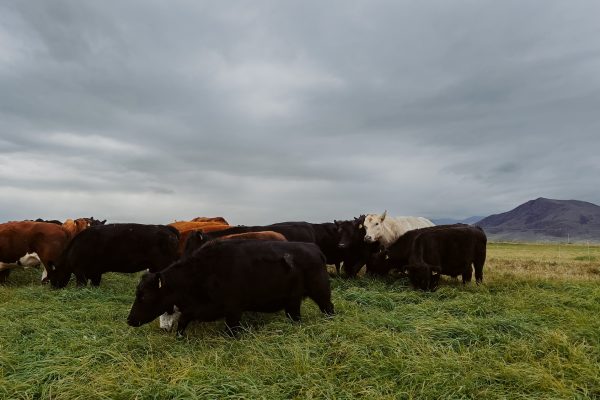
Our cattle eat nothing but grass and hay. Ever.
“No antibiotics” With the justifiable concern about antibiotic use in livestock, we have seen this claim become more common. Unfortunately, if you read the fine print, what is really being claimed is that the animals are not fed low level antibiotics while in the feedlot (a practice that increases feed efficiency and decreases the incidence of illness–read more). These animals can be, however, treated with antibiotics if they become sick, and the only protection you have is the standard recommended withdrawal time. The percentage of animals in a feedlot requiring treatment for illness depends on the management of the feedlot, the density of animals, the weather, and the presence of disease.
We remove all animals that have required antibiotic treatment because of illness from our regular program. Our animals are truly “antibiotic free.” Treated animals are available for purchase direct from us at a reduced price.
“Free ranging” or “free roaming” may be used on labels if the producer can demonstrate that the animal has been “allowed access to the outside.” This can still mean that the animal spent much of its time in a feedlot or inside on a concrete slab.
Our animals spend their entire lives outside, with fresh clean mountain air, free flowing spring and stream water, grass underfoot, free to roam within their pastures at will.
“All Natural” may be used on any meat that has been “minimally processed and containing no artificial ingredients.” This simply means that no chemicals can be added to the meat during or after processing. Note that meat still gets a chemical disinfectant bath during processing to try to reduce the E. coli on the carcass. The “natural” label does not exclude meats raised using feed-grade antibiotics or hormone implants, nor does it exclude animals raised in a feedlot. The USDA does not regulate this term on labels, meaning that meat labeled as such is not given any additional inspection.
Alderspring Beef is a true all-natural product. Only the animal, clean water, clean air, and clean green pastures. No antibiotics, no hormones, no irradiation, no pour-on insecticides and wormers.
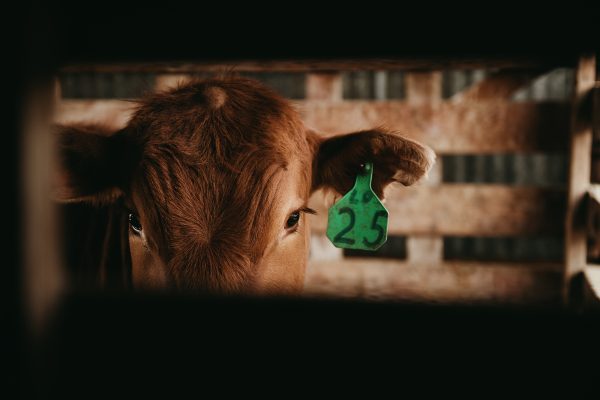
“No Added Hormones” All steroid hormone products marketed in the U.S. for increasing rate of growth in beef cattle are sold as implantable pellets and are designed to deliver the hormones at a slow, constant rate when injected subcutaneously under the skin of the animal’s ear. Because the USDA does allow the use of a number of hormones on beef, the terms “no hormones administered” or “no synthetic hormones” means no hormones in the form of implants have been used over the lifetime of the animal. Use of the term “hormone free” is considered “unapprovable” by USDA on any meat products because all animals have natural levels of hormones.
We administer no hormones in any form.
“USDA inspected” does not necessarily mean grown in the USA. Consider this from R-CALF (a grassroots cattle producer organization):
During 2000, over 16 percent of the beef consumed by United States consumers was imported beef. During the first four months of 2001, the percentage grew to 19 percent. If this trend continues, over 20 percent of the beef consumed in the United States will be imported beef in 2001. Some of this imported beef carries a USDA quality grade stamp, leading consumers to believe it is a domestic product.
The U.S. imports beef from 26 countries. In 1999 – 2000, these countries included Canada, Mexico, Honduras, Nicaragua, Costa Rica, Ecuador, Chile, Brazil, Uruguay, Argentina, United Kingdom, Ireland, Austria, Spain, Italy, Norway, Switzerland, Croatia, United Arab Emirates, Nigeria, Thailand, China, Japan, Australia, New Zealand, and Other Pacific Islands.
Alderspring Ranch Grass Fed Beef is produced from birth to finish on our ranch in May, Idaho.
We consider Alderspring beef to be “beyond organic.” It is 100% grassfed, organic, and raised on wild pastures. The taste is real beef, the texture tender, but more lean. We sell our beef to people who are looking for something healthier for them, better for the animals and the land, and refreshingly different.


Leave a Reply