
Growing Grassfed
We’ve been growing grassfed beef for nearly a quarter century, and over the years have honed our protocols and skills to grow the best grassfed organic beef you can find. We have found that low stress humane treatment, mimicking natural processes and patterns, and using organic methods to regenerate our soils and our grass and care for our cattle results in a beef that tastes amazing while treating all the parts with respect and stewardship.
If you don’t find and answer to your question about how we care for and grow our organic grassfed beef, please contact us! We also invite you to get to know us better over at our blog Organic Beef Matters.
What do you mean by “regenerative”? Can you describe your practices?
Unfortunately, many big corporations are beginning to use the term “regenerative” as a meaningless marketing term while actually practicing none of the principles of regenerative agriculture. When we describe our practices as “regenerative,” we mean we use practices that have been shown to increase soil health, improve animal health, and sequester carbon. In terms of results, this means we’ve tripled our ranch’s soil organic matter, doubled our grass productivity, increased soil water retention, decreased cattle sickness rates, and increased beaver colonies on our rangeland from 0 beavers 9 years ago to 14 colonies at the last count. We’ve done the math, and our entire operation is carbon negative, which means we put more carbon in the ground than our operation releases. Want the full details on our regenerative practices and how we put our money where our mouths are when we say “regenerative”? Visit this page.
Are Alderspring beef raised in a humane environment?
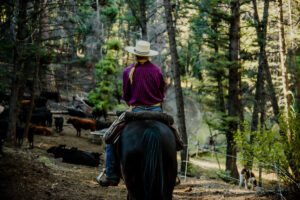
We believe we have a moral obligation to treat our animals with the utmost care and respect, revitalizing the ancient concept of “husbandry” which considers the animal’s natural inclinations. This involves studying their needs and meeting them, as well as practicing stockmanship, which is the quiet herding of animals.
Does Alderspring use GMOs?
Absolutely not. All of the beef we sell is certified organic. This means that all of the feed they eat must be completely free of GMO’s, as well as free of the associated use of pesticides on GMO pesticide resistant crop. Currently a GMO alfalfa has been approved and we are concerned about contamination from neighboring ranches. Our old heritage stands of alfalfa are resistant to contamination, but we have begun using the ancient legume of sainfoin as a replacement for alfalfa in any new seedings.
Some people believe that all grassfed beef is free of GMOs. This is not necessarily true. Grass fed beef is produced using the following GMO crops: beets, corn and soybean crop residue and alfalfa. The organic label is the most rigorous GMO free label available.
Do you use antibiotics or use growth hormones?
Never. While we sometimes treat sick animals with antibiotics (if an animal is suffering, we believe we have an obligation to mitigate their suffering with antibiotics). Beef from an animal treated with antibiotics will NEVER be sold to you as Alderspring Grass Fed Organic Beef. Instead, we sell this beef locally with full disclosure or list it on our website as non organic quarters with full disclosure about the antibiotics given and when! We never use any form of growth hormones.
Do you ever raise or harvest cloned animals?
Certainly not. Cloning animals do not fit our philosophy of ranching in sync with nature.
Do you raise the cattle?
We raise our beef on our family ranch. Some of our cattle are born here on the ranch, and some are purchased as calves or yearlings from a few certified organic producers who we know well and who are, with us, working to change the way cattle are raised and land is managed. Some of their ranches are better suited to mama cows and raising young calves than finishing beef, and so our partnership with them is a win/win all around- for these other family ranches, their animals, and the lands they are working to restore.
These young cattle will spend several to many months here on Alderspring before they are harvested, ensuring the consistent Alderspring quality our customers expect. We will never simply launder cattle from a bunch of other producers; every beef we sell will spend a significant amount of time under our personal husbandry. We think this is critical to the recognition we have won for raising the best grassfed organic beef available.
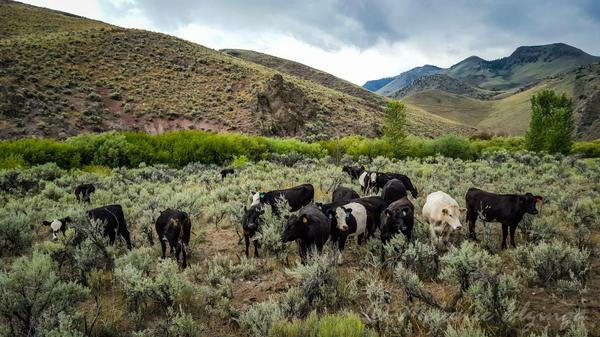
By purchasing from us, you support an agricultural model that is becoming more and more unusual in the US: a non-corporate, single-family owned farm or ranch. You also support our vision of sustainable agriculture and the care for the land and the animals on it that it entails.
Organic
Are you certified organic?
Yes, we are completely certified organic.
Is all the beef you sell certified organic?
All of the beef for sale on the website and in retail outlets is certified organic unless sold as bulk beef on our bulk beef page and clearly listed as “non organic” or “not certified.” We manage our home ranch of about 1700 acres and a range of 46,000 acres as organic, making us the largest certified organic ranch in the country. We use natural pest control, crop rotation, aggressive hand-grubbing of weeds, and manure management to achieve a productive healthy ranch ecosystem. We are certified organic by the Idaho Department of Agriculture.
We occasionally have animal that cannot be certified for various reasons (usually antibiotic treatment when very young calves). Once these animals completely recover, they are put back into the herd and graze alongside our organic cattle, but remain clearly identifiable through records and ear tags. When these animals are ready for harvest, we offer them for sale locally at a discount as quarters and halves, or list them on our website as quarters or eighths with full disclosure about the antibiotics given and when.
What is the definition of organic?
The word “organic” refers to the growing and processing protocols that we use for our beef. Everything from the pastures on the home ranch, to the wild 46,000 acres of rangeland, to the processing itself, is subject to organic rules. We use no synthetic chemicals, growth hormones, insecticides, pesticides, parasitides, or any other chemicals in the production of our beef products. Legally, the term can only be used by producers like us that keep detailed records and subject our operation to the scrutiny of a disinterested 3rd party inspector.
Many producers label their beef as “Beyond Organic,” but yours is just “Organic.” What’s the difference?
Be wary of claims of “beyond organic.” Many grass fed beef producers are using that term, but do not truly run an organic operation and do not go through the rigorous inspections required for organic certification. We have seen the term “beyond organic” used on labels and advertising for cattle that have even been given antibiotics or hormones, or grazed on GMO corn stubble. Using the term “beyond organic” is actually illegal, but there is little money in the organic certification program to go after all those producers who use the term.
We’ve also seen producers claim to be organic, and advertise as such, but not undergo the rigorous inspection needed to be certified organic, often claiming it was too expensive. We always found this puzzling, because the costs of being organic are in the day to day operations of the ranch (for example, using human power to eliminate weeds rather than chemical sprays). If a producer was truly operating organically, the actual cost of certification is not that high.
To read more about why we think claims of “beyond organic” are BS, read here.
How is organic beef different from regular supermarket beef?
Unlike natural and other eco-label claims, only organic offers government-backed assurance that products are grown and processed without the use of toxic chemicals, antibiotics and synthetic growth hormones. Organic is the most heavily regulated food system. Only organic guarantees no toxic synthetic pesticides, toxic synthetic herbicides, or chemical NPK fertilizers are used in production of pastures or hay, and no antibiotics, pesticides, or growth hormones are given to animals. Organic producers and processors also are subject to rigorous announced – and unannounced – certification inspections by third-party inspectors to ensure that they are producing and processing organic products in a manner you and your family can trust.
Here at Alderspring, we spend many hours and dollars managing animals and pastures holistically. We control weeds with hand labor, beneficial insects, and targeted grazing rather than chemicals. We maintain the health of our herd by careful husbandry. And we improve the fertility of our soil through grazing management, working with nature.
What happens when one of your organic calves gets sick?
The calf is treated for the illness. Caring for them is part of our stewardship ethic, and it would be wrong to simply let them die when judicious use of antibiotics would save them. But that animal is no longer marketed as organic. Because we implement low stress holistic herd health methods, a sick animal is rare. These beeves continue to graze on our certified organic pastures along with our organic cattle, and when ready, are sold direct to customers fully informed about the reasons that particular animal is no longer certified organic so that they can make that decision for themselves.
How is “certified organic” beef different than “natural” beef?
Did you know that ANY FRESH meat qualifies as “natural” according to the USDA? The term “natural” on a label only means that the product has been “minimally processed.” To label our beef as organic, however, requires a much more strict code of standards and ethics. We have independent agents that come to annually certify our land, animals, and packaging facility.
Will eating organic foods improve my health? If so, how?
While we make no claims that eating our beef will make you healthy, many studies suggest that organic food is more nutritious, and that pesticides in food may be a health hazard. A recent study into organic vs. non organic foods showed that by adhering to a strictly organic food program any traces of pesticides in a child’s body will drop significantly after eating organic for just 7 days. The controlled study had children eat non organic food to begin with and tracked pesticide levels in their bodies. They were then put on an all organic program for 7 days and the pesticide traces dropped dramatically. They then went back on a non-organic program and the traces of pesticides reappeared.
You can read more about this study here.
There is also a current study underway by Dr. Stephen Van Vliet comparing the nutrient profiles of Alderspring grass fed beef to feedlot grain fed beef. You can read about the results on this page on our blog. Here’s a brief statement taken from the executive summary of the study’s preliminary results:
“We found that 377 out of 578 compounds differed between the grass-fed and grain-fed beef samples. This represents a much larger difference between grass-fed and grain-fed beef than previously considered, which goes far beyond simply omega-3 fatty acids. Our main findings are:
- Pasture finishing increases phytochemicals, lipids, fatty acids, and other potentially health-promoting bioactive compounds.
- Pasture finishing decreases potentially less-desirable compounds such as homocysteine and triaglycerols.
- Pasture finishing improves metabolic health pathways of the animal.
Phytochemicals, polyphenols, tocopherols, and carotenoids were found to accumulate in 2-3 times higher amounts in grass-finished meat. Phytochemicals are naturally occurring compounds derived from plants that have anti-oxidant and anti-inflammatory effects in animals and humans. Phytochemicals can have a role in the prevention and management of chronic diseases. Additionally, we found 7-fold higher amounts of omega-3 fatty acids in the grass-fed meat, which have important roles in heart and brain health. We also found higher amounts of saturated long-chain fats in the grass-fed beef which, unlike other saturated fats, are associated with a decreased risk of heart disease. Grass-fed animals also had lower levels of homocysteine, triglycerides, and advanced glycation end products, which all associate with improved cardiovascular health for both the animal and the consumer. Vitamin C, B5, and B6 were higher in the grain-fed beef, which is likely the result of the higher contents of these nutrients in the total mixed ration.“
Grass Fed
What does “100% grass-fed” mean?
We were one of the pioneer producers of grass fed beef nearly a quarter century ago, long before it was trendy. We maintain the vision of those early days; for us at Alderspring, “grass fed” means that our cattle eat only grass and other forages for their entire lives. These cattle will eat from pristine mountain pastures with a variety of native grasses, wildflowers and small shrubs. On the home ranch, they will eat from our diverse pasture sward of grasses and legumes like clover and sainfoin, and eat hay harvested from those same meadows.
Some “grass-fed” beef comes from cattle that are “grain-finished” to add fat and marbling, but our cattle are 100% grass-fed and 100% grass-finished. They never eat grain. They are never in a feedlot.
Unlike the “Certified Organic” label, the “grass fed” claim is meaningless because it is not regulated in any way. We have seen producers that run a very conventional operation call their cattle as “grass fed” and enjoy the premium that the unsuspecting consumer is willing to give them. At this time, the only way to ensure that you are truly getting grass fed beef is to ask questions of your producer. Contact us anytime!
Why is Alderspring grass fed beef superior?
Three things contribute to Alderspring’s superior flavor and quality: heritage beef genetics that finish well on grass, exceptionally nutritious grasses growing on highly mineralized virgin mountain soils, and 30 years of experience growing grass fed. We take it a step further by using organic methods to improve soil fertility through regenerative grazing techniques, and emphasize animal wellness rather than using non-organic treatments like antibiotics or hormones to increase growth and health. We truly believe that our methods produce the absolute best grassfed organic beef you will ever try.
Is grass fed beef nutritionally superior?
Studies have shown that true grass fed beef has a superior nutritional profile compared to conventionally grown grain fed beef. Grass fed beef is higher in omega-3 fatty acids, vitamin E, beta-carotene (vitamin A precursor), and Conjugated Linoleic Acid, a fatty acid shown to fight cancer. You can read about a study comparing nutrients in Alderspring beef to grain fed beef on this page.
Is grass fed beef less tender than grain fed beef?
It shouldn’t be. We work hard to produce exceptional grass fed beef that should be a delight to eat.
What do your cattle eat in the winter?
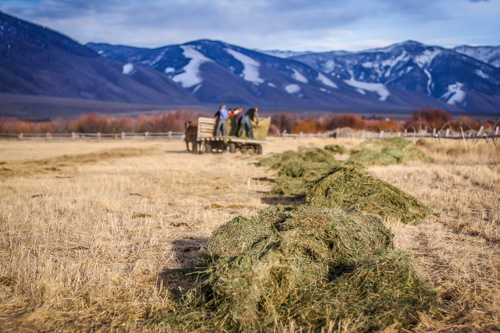
The onset of winter doesn’t mean the end of grazing for our animals—there is still stock-piled forage that they consume until snow is an issue, rare in our high desert climate. When snow makes grazing impossible and in the spring before grass comes back, we feed our animals our own hay, which is pasture grass that is harvested and stored when dry. We have found that with careful attention to our hay crop, we can harvest excellent beef even in the winter with no fall-down in flavor or tenderness.