

BETTER FOR LAND, WATER and WILDLIFE
Your purchase of Alderspring Ranch Grass Fed Beef benefits the environment in two important ways.
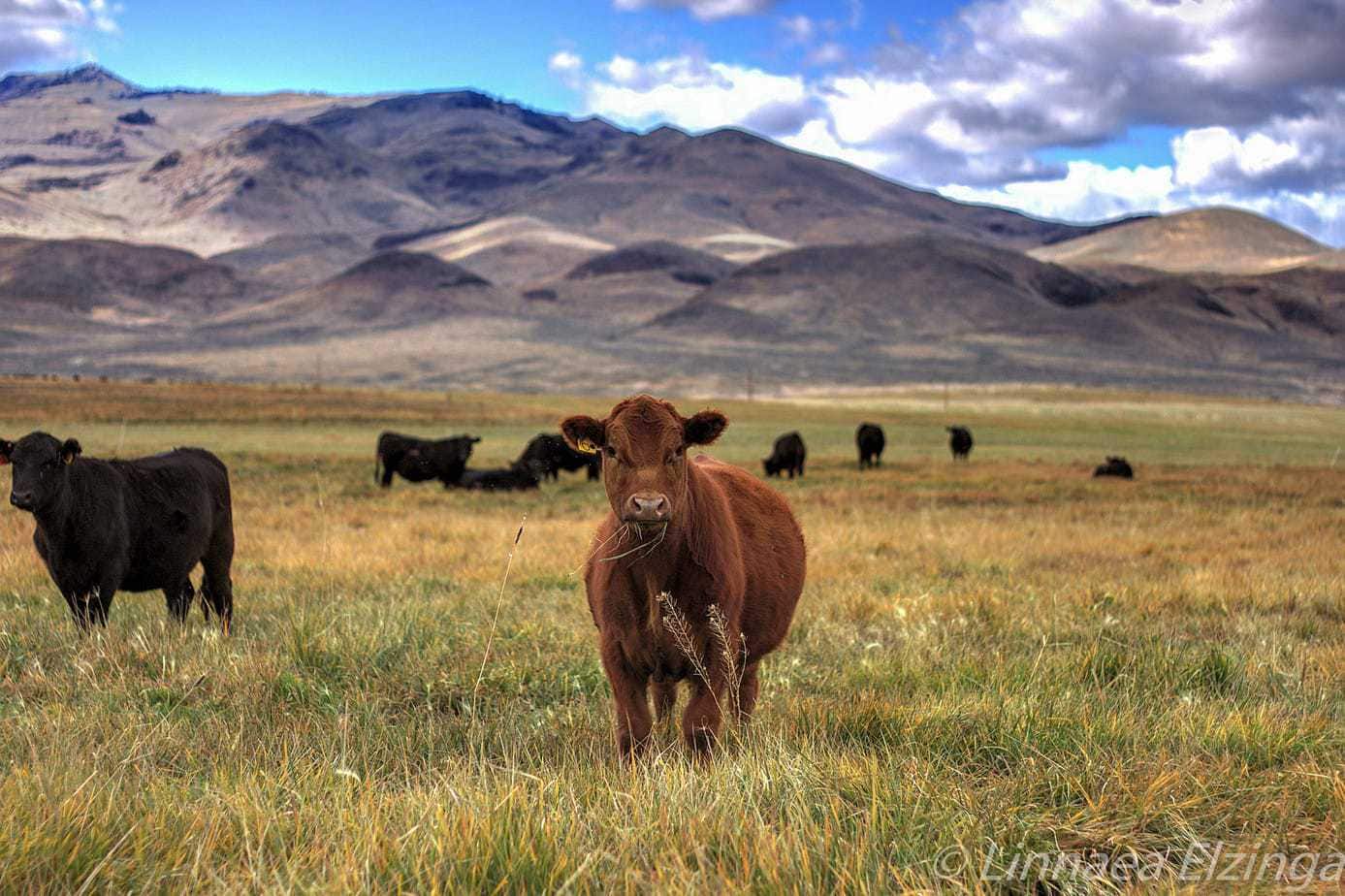
First, it allows us to continue to improve the ecological condition of Alderspring Ranch and our 46,000 acre certified organic range land. We’re excited about some of the things we are doing, and invite you to learn more. Here’s a summary of what we’ve been up to:
- Initiated an innovated method of stewarding livestock on public ranges to meet conservation goals. This new approach, called “inherding” is a cooperative project between Alderspring Ranch, The Nature Conservancy, the Central Idaho Rangelands Network, and The Sustainable Agriculture Research and Education grant program. 2017 will mark our 3rd year implementing inherding as a way to improve habitat for endangered fish and wildlife and regenerate wild rangelands using conservation riders.
- Completed conservation easements with The Nature Conservancy on the 845 acre Pahsimeroi Ranch and 770 acre Little Hat Creek Ranch.
- Protected 1.5-miles of the Pahsimeroi River on the Pahsimeroi Ranch that has supported an average of 40% of the Chinook salmon spawning activity in the Pahsimeroi watershed.
- Protected approximately 50 acres of riparian habitat along the Pahsimeroi River and Big Springs Creek for fish and wildlife.
- Provided perpetual protection from habitat fragmentation on 1,550 acres of existing agricultural lands in the Pahsimeroi and Hat Creek watersheds and created compatible agricultural practices adjacent to river corridors.
- Eliminated fish migration barriers at 2 irrigation diversions, the P-9 and P- 11, on the Pahsimeroi River opening up approximately 6 miles of habitat for anadromous fish.
- Modified irrigation system (e.g., eliminated one cross ditch) to provide Chinook salmon access to approximately 3 miles of previously unavailable spawning habitat in Big Springs Creek, more than double the habitat that existed previously.
- Increased instream flows in the Pahsimeroi River and Big Springs Creek by as much as 13 cfs through overall water conservation projects on the ranch.
- Increased available anadromous fish habitat and improved water quality by reconnecting Muddy Springs Creek with the mainstem of the Pahsimeroi River.
- Implemented conservation-oriented ranch management techniques focusing on improving land health through innovative and alternative practices including:
- Management intensive grazing: A grazing management approach that has been shown to reduce weed populations, reduce hummocking on wet soils, and increase plant density and diversity.
- Winter forage stockpiling (rather than supplemental hay): Selected pasture areas are rested during the growing season, resulting in long-term improvement of plant vigor, and natural seeding of grasses. Tall grass pastures retain soil moisture during the hot parts of the summer resulting in more efficient water use, and aide in maintaining soil processes.
- Weed management: Utilization of grazing, manure management, and biological controls to deal with weeds rather than using pesticides.
- Innovative approaches to public lands grazing: organic certification and cooperative organic weed management on 46,000 acres of federal (U.S. Forest Service and Bureau of Land Management) range land; extensive riding of range lands to benefit fish and wildlife habitat; development of strategies to co-exist with predators such as wolves, mountain lions, and bears; implementation of range land resource monitoring exceeding federal guidelines.
Second, the environmental benefits of grass fed beef accumulate because of the sustainable way grass grown beef is raised compared to feedlot beef. These include lower fossil fuel costs, better water quality, less soil erosion, and greater natural diversity.
According to David Pimentel, a Cornell ecologist who specializes in agriculture and energy, the corn we feed our feedlot cattle requires a surprising amount of fossil fuel energy. Growing the corn used to feed livestock in this country takes vast quantities of chemical fertilizer, which in turn takes vast quantities of oil. Because of this dependence on petroleum, Pimentel says, a typical steer will in effect consume 284 gallons of oil in his lifetime. This is probably an underestimate. Additional fossil fuel costs accumulate in trucking animals, trucking feedstuffs, and removing waste. An important environmental benefit of grass fed beef is the significant reduction in fossil fuel requirements for producing beef, animals which excel at harvesting grass from marginal lands.
Water pollution from feedlot-raised beef is a growing concern. At Alderspring Ranch, we are careful about keeping the water that flows through our ranch clean. We have fenced cattle away from streams and riparian areas. We do everything we can to keep the valuable nutrients in cattle manure on our pastures rather than allowing it to escape and become water pollutants. We use a permaculture system of pasture maintenance. We do not plow and seed annual forages. We improve pastures through grazing management and hand seeding. This approach eliminates soil erosion, and works to build the organic matter and fertility of soil.
Finally, we avoid monocultures. We rejoice in our brushy fenced breaks that are home to deer, nesting birds and small mammals. We try to encourage the growth of cottonwoods along our ditches to supply shade for our cattle, and habitat for raptors that then reduce our rodent populations. We allow the wetter areas of our ranch to grow native sedge meadows, and graze these carefully to avoid hummocking.
You can visit our blog, Organic Beef Matters, and learn more about some of the projects we have going on. If you are interested in joining our team, check out our employment page to see if we have any openings.