Looking for Beef Roast Recipes? Click here.
Looking for Beef Roast Information? Read on!
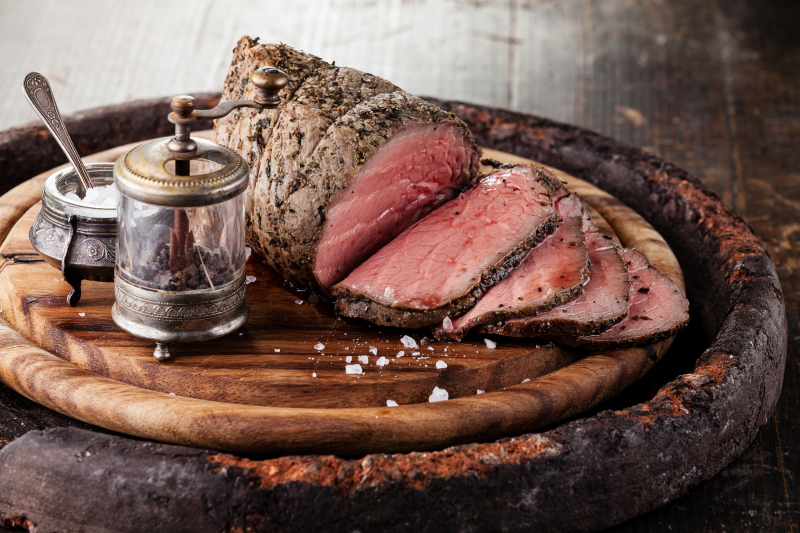
A roast is simply a cut of beef thicker than 2 inches that is typically cooked in the oven. Roasts can also be grilled or made in a crock pot. They are quite versatile and can be prepared whole or cut into smaller pieces and used in stews and casseroles.
I love roasts. You can serve a premium roast for a fuss-free but elegant company dinner. You can put a pot roast in the crock pot in the morning for a busy-day supper. Left over roast and drippings are the best base for a family soup or casserole. I make many pot roast meals in the winter when the wonderful smell and the heat of the oven make my home feel like a cozy retreat from the cold. The long, slow cooking of a pot roast turns an inexpensive cut of beef into a delectable feast. Many people think a roast is such a fuss, but it is really one of the easiest meats to make.
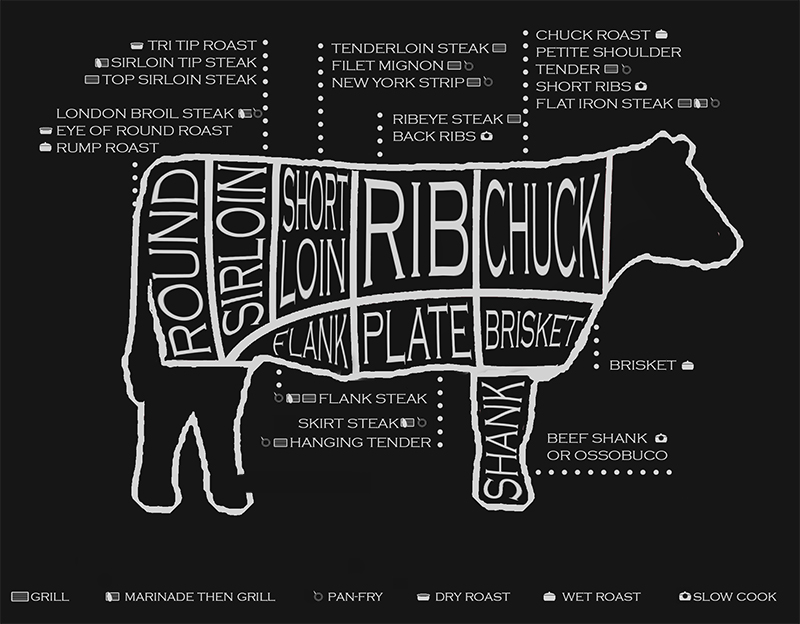
Like steaks, roasts can be prepared using dry heat or moist heat. Dry roasting is usually best for roasts made from the loin and rib (tenderloin and rib-eye roasts). I also prefer to dry-roast the eye of round, bottom and top round, cross rib, mock tender from the chuck and sirloin tip roasts, even though these are less-tender cuts. (A roast from the chuck eye may also be suitable, but you must select one that lacks connective tissue, e.g., one that looks like a solid piece of meat.) Because they lack the connective tissue typical of pot roasts, these solid, fine-grained, consistent cuts are excellent when roasted to medium rare and sliced very thin (I will sometimes marinate these roasts or braise them in a covered Dutch oven). Moist heat roasting as pot roasts is more appropriate for less tender roasts from the chuck, rump and brisket. These are intensely flavorful when cooked in this manner.
Roasts can also be grilled. Tenderloin and rib-eye roasts can be grilled using dry heat, but all other roasts require marinating and basting while cooking. Grilling a roast is a bit tricky, so check out our suggestions. Be careful to use low heat to avoid overcooking the outside before the inside is done.
Dry roasting.
Dry roasting is done in an uncovered pan, in the oven, with the meat suspended on a rack (because our meat is so lean, you can skip the rack if you don’t have one; its purpose is to keep the roast from sizzling in its own fat). First, rinse and pat the roast dry with paper towels. Season the roast according to recipe (I often use nothing, but always salt after cooking). I usually pre-heat the oven to 500 degrees F, roast for 20 minutes, and then turn the temperature to 200 degrees F, and roast until the internal temperature reaches 144 degrees F (for medium rare). This avoids the typical problem of roasts of overcooking on the outside while waiting for the inside to reach the right temperature. The initial high heat produces a nice outside crust, while the low-temperature cooking brings the inside to the desired doneness almost to the outside edge. Another method (Glenn’s favorite), which may yield a juicer end product is searing the roast (with the rub on, if using a rub) on the stovetop in hot olive oil, preferably in a pan that you can put in the oven like cast iron. You want the oil just beginning to smoke. When all sides have been browned (think medium brown) put the panned roast in the oven and finish at moderate heat. Again, remove the roast when the internal temperature reaches 144 degrees F for medium rare. The crust formed on the outside of the roast from searing gives a superb flavor to the rest of the roast.
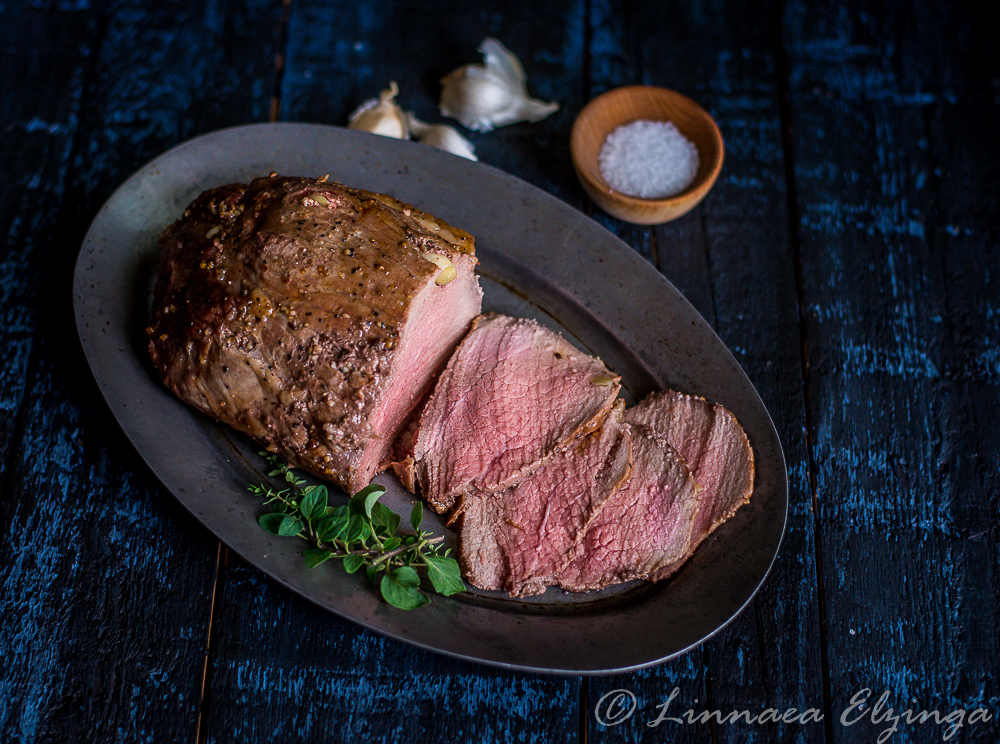
Some cookbooks recommend cooking at high heat and then turning down to 325 degrees F or so, while others recommend roasting at that temperature from start to finish. I find with our lean roasts that roasting at greater than 225 degrees F for any length of time tends to overcook and toughen the meat on the outside.
When roasting a whole rib roast or filet, you can meet individual preferences for doneness of your guests by cutting interior slices for the rare and medium rare folks and cut nearer the ends for the medium and well done preferences. If you have individuals wanting rare (think bloody) pull the roast off at 130 degrees F measured in the middle of the roast. This would yield more medium rare cuts than medium, and the ends would likely be medium rather than well.
When the roast reaches the target internal temperature, remove it from oven, cover loosely with foil, and allow to stand until the internal temperature reduces to 135 degrees F, about 20 minutes. This avoids moisture loss in the form of steam from an opened too-hot roast and allows juices to set.
In summary, if I were to give the four keys to successful dry roasting they would be to: 1., Choose the right roast (see above). Roasts with a high degree of connective tissue are not suited for the rare to medium rare finish you want with a dry roast. 2., Monitor your temperature. Dry roasting in excess of medium doneness (155 degrees F internal temp) dries out a roast. Then it becomes similar to the process of making jerky, and jerky you will get. Take out temps should be 135 degrees F for rare, 145 degrees F for medium rare, and 155 degrees F for medium. You may have to tweak these a little based on your own preference and elevation. 3., Sear to seal. Searing helps create a barrier against moisture loss, and makes a significant flavor improvement on simply putting a roast in the oven. Put up with a little smoke and find success! 4., Let the juices set. After internal temp is reached, give the roast a few (10-20) minutes on the counter to prevent steam loss while carving and allow juices to be reabsorbed by the meat. Happy roasting!
Pot roasting.
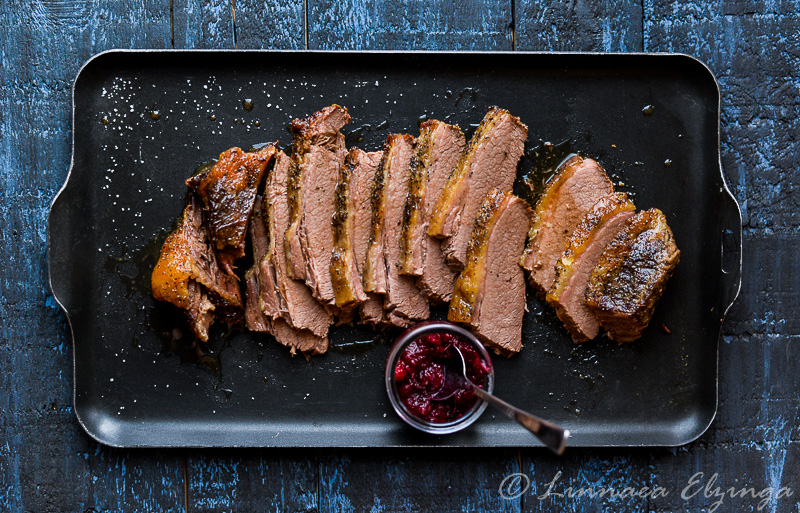
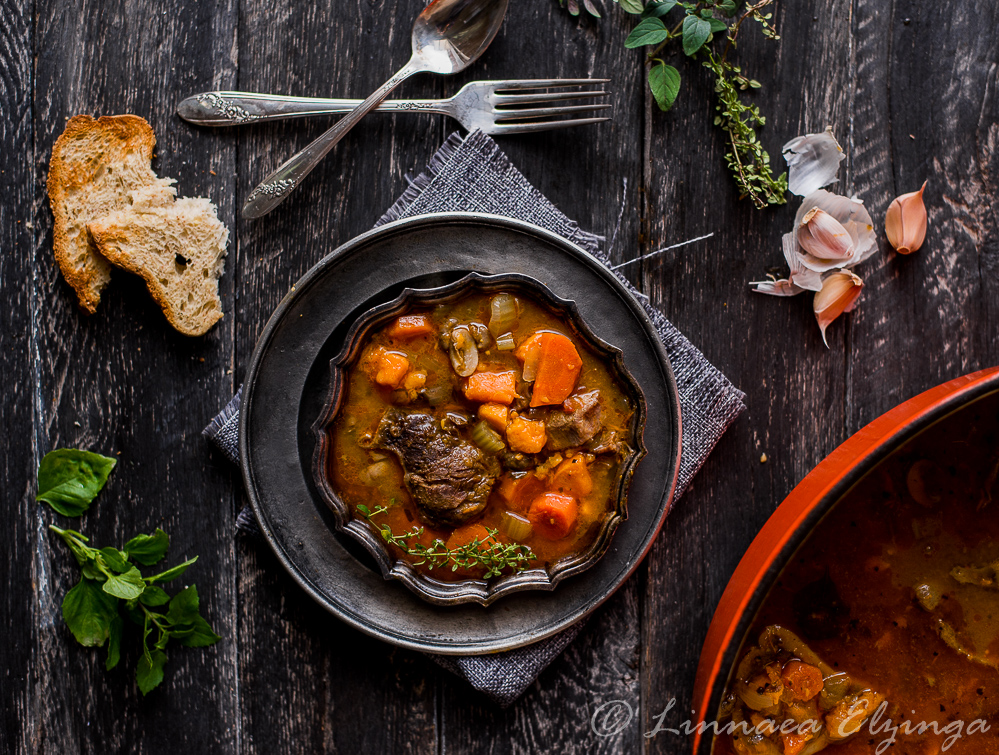
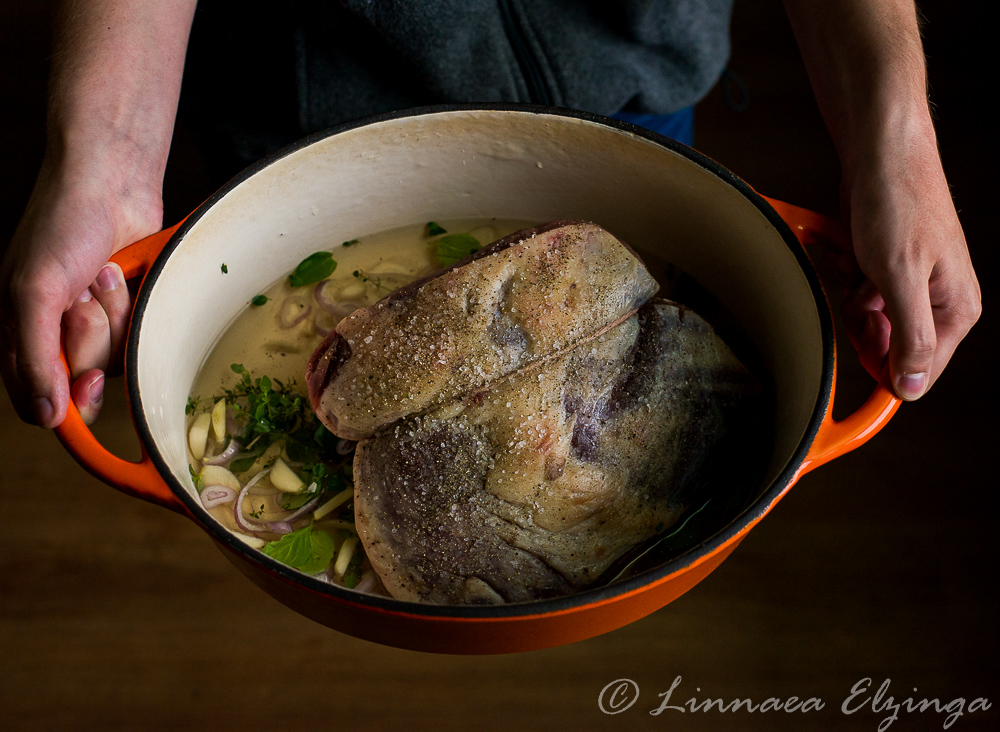
You can prepare our grass fed pot-roasts (rump and chuck) your favorite way. Briskets follow these same general rules. Simply ensure that most of the cooking is done with moist heat (there should be some liquid in your pan), tightly covered, at low temperature (usually no higher than 250 degrees F). Higher temps for these long durations end up a burnt offering. We like to sear roasts first in a Dutch oven with a little olive oil, add spices, sauces and vegetables, a little water, and bake tightly covered in a slow oven (225-250 degrees F) for 4-6 hours. These roasts are the most flavorful of all roasts, but long, slow cooking to well-done is required to release the richness of the associated connective tissues, so the longer the cooking time the better. The meat should be fork-tender. These roasts will not slice well unless cooled overnight, but they are nicely served in chunks. Because our meat is so lean, your pot roast will not be as “juicy” (fatty) as you are accustomed to, so I usually serve these pot-roasts with a bit of sauce or gravy (our lean meat makes wonderful guilt-free gravy!). You can also simply drizzle pan juices over the meat in a deep serving dish to replenish the moisture.
Pot roasts lend themselves well to family meals; they can be left to cook all day in a slow cooker, or made the night before and reheated. The meat from these roasts is also excellent for shredded barbecue or Mexican dishes calling for shredded meat. Simply cook to well-done, allow to cool, cut into thick slices, and pull apart with a fork along the grain.
Grilling.
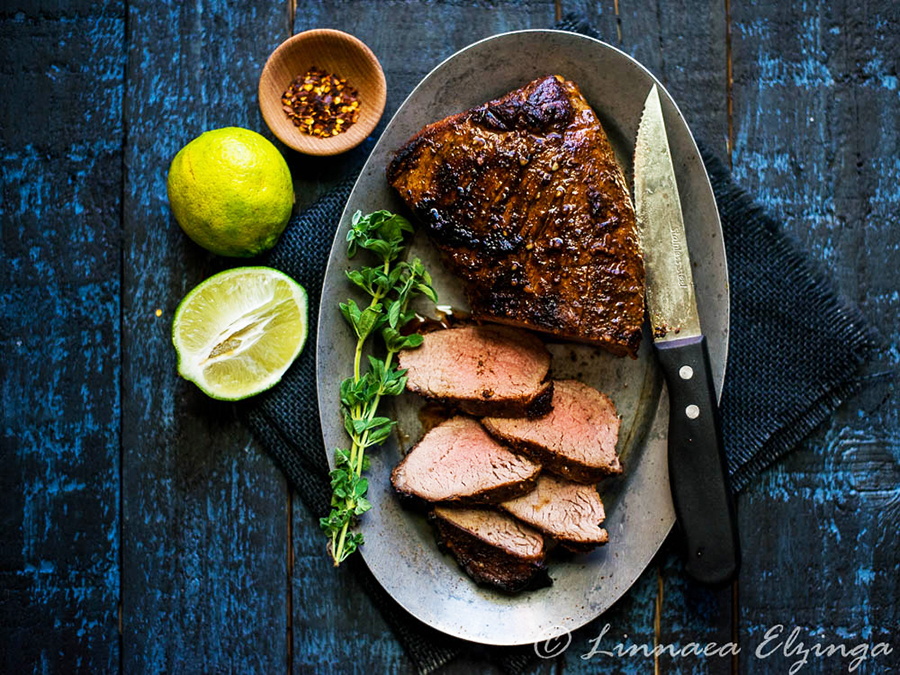
Grilling roasts successfully requires care and patience, but the rewards are great. Of roasts sold in the Alderspring store, I would recommend only grilling the tri tip, eye of round, and sometimes the top sirloin roast. The tri tip (photographed above) is a great one to start out with because it is thinner than the other two and a little easier to cook more evenly. If you want to get that great smokey flavor in other roasts, you can! Briskets especially are fantastic on when smoked. As for grilling, however, these tips will help:
1. Brush roast with oil before roasting.
2. Season, but do not salt before grilling.
3. Sear over a hot flame or coals on all sides.
4. Use tongs to move roast to a cool portion of the grill.
5. Move to a cool portion of the grill for cooking until the internal temperature reaches target for desired doneness. Turn about every ten minutes carefully with tongs.
6. For less tender cuts, marinate prior to roasting for at least 4 hours, then roast on the cool part of the grill until done inside. Turn regularly, basting with marinade with each turn.