The age-old question revisited: What’s the beef on dry or wet aging? At Alderspring, we have always considered dry aging an important part of our process because of the flavor and moisture concentrating effects. We dry age the entire carcass. Most dry aged beef is only the high end primals that contain the New York, ribeye and tenderloin.
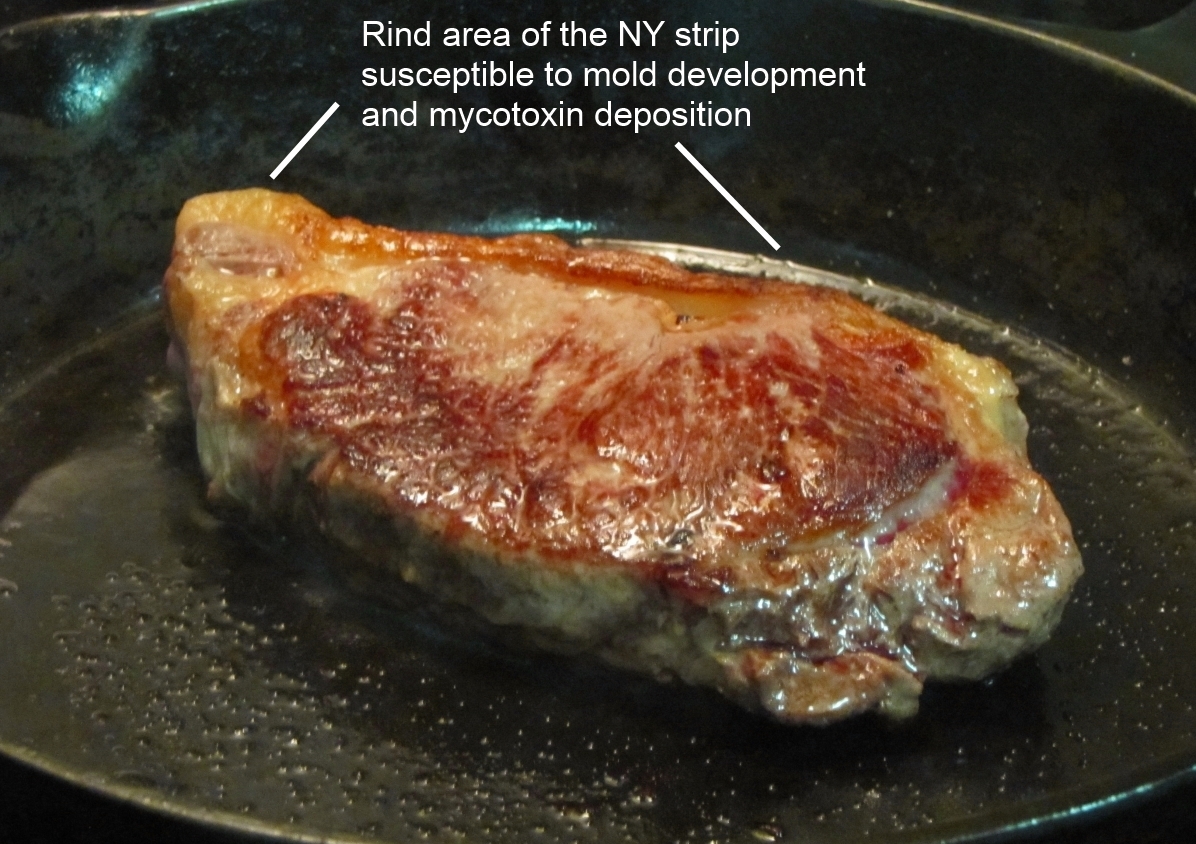
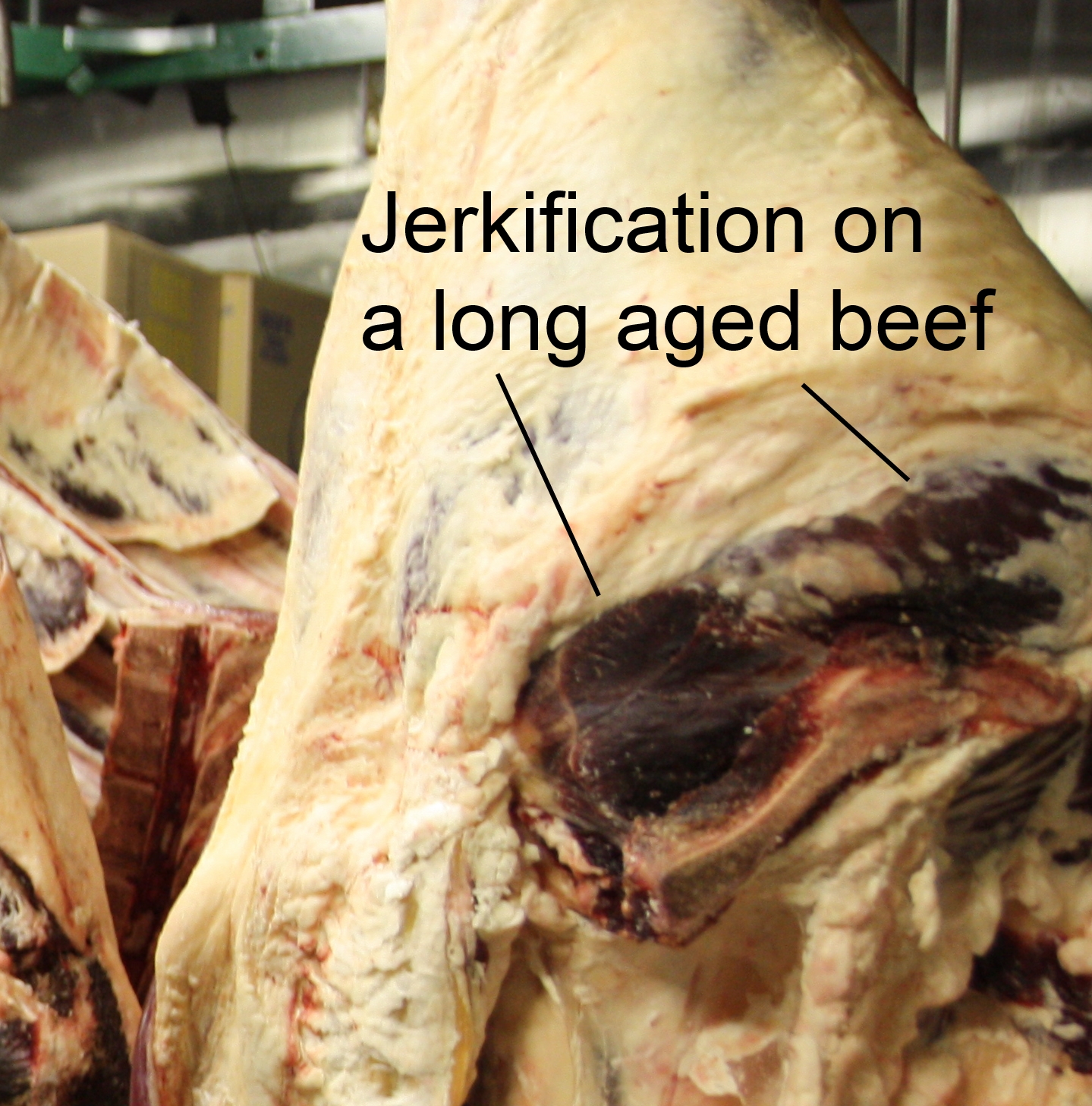
We like the whole carcass aging because it improved all of the other cuts as well, including improving the taste and texture of the ground beef. We used to dry age 14-21 days—even at times 28 or 35! The interior of cuts and primals was wonderful, but the problem we kept having was that what we call “cooler funk and jerk”. The off flavors we call “funk” in long-aged beef are a result of fungi and bacteria in the aging cooler that colonize hanging carcasses. The moist cool air and many carcasses are the perfect environment for these baddies, and it is impossible to eliminate them. Some of them even colonize on the beef (I have observed other people’s carcasses in the early stages of mold development on 3-4 week ages). Mold is problematic due to the human allergenic issues with the fungi itself, mycotoxins from fungal death and huge allergic or toxic response to them, and simple off flavors or “funk” caused by the mold itself. Like a cross between aged cheese, mushrooms and dirty dishrags, funk has no place on the outside of one of our lovely NY strip steaks, or any other part of our beef. We wanted to fix this. In addition to mold, the dry-aging process creates a layer of blackened inedible beef we call “jerk” because it is similar to beef jerky. Because we dry-age whole carcass, we were losing quality to “jerkification” on flanks and skirt steaks, cuts that are thin and on the outside of the carcass. The biggest problem was that blackened pieces of beef were ending up in our ground beef. Occasionally packages had several specks of black that caused us to pull them from sale. Unusable trim increased dramatically, with all of the jerk beef going into…the garbage can. Such waste is not stewardship, nor does it create an affordable product. We wanted to fix this too.
Enter Dave Asprey of the Bulletproof Executive who has talked extensively about the problems of mycotoxins and human health. Alarm bells starting ringing in my ears when I read about it and spoke to Dave about it. We started to experiment in earnest. After several months of trying different protocols, we hit on one that is a winner. We now we dry age a total of 8-9 days whole carcass (according to USDA, this is still considered “dry aged”). We find 8-9 days to be optimal because excess moisture in the carcass is lost (so you don’t pay for it by the pound in watery beef). The loss of moisture also concentrates flavor. We ran several tests comparing the shorter aging with the long aging we used to do, and found that the flavor was excellent, but the objectionable “funky” off flavors were gone. In addition, the shorter dry aging eliminated the darkened carcass bits, and resulted in beautiful flank and skirt steaks. Our next step is to put the dry-aged primal (big parts of the carcass that have not yet been cut into serving-sized pieces) into a wet age process. Wet aging occurs inside a sealed pack under refrigerated conditions. Our interest was piqued about wet aging when we watched one of our high end restaurant chef customers take our long dry-aged beef, and then keep it in his refrigerator for another 2-3 weeks before serving it. Nearly all the beef available for sale in the grocery case, including many grassfed organic lines, is wet-aged. The standard wet age process bothers us, however.
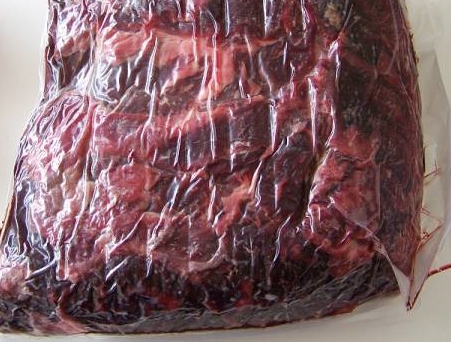
Typically, primals are vac-packed for wet aging the day after kill- the beef hardly has time to drain. This looked like fetid environment to us, because of the tons of fluid in the bag, sloshing brown fluid across the entire surface of the primal. After the 8-9 day dry age, then 10-12 day wet age, our vacuum packed primal looked dry and clean and ready to cut into serving size pieces, vacuum pack and flash freeze. This protocol is definitely more work and time, but the quality appears to blow our former steak panel results out of the water (no pun intended) in especially tenderness, and more flavor development. So…mycotoxins eliminated, funk ended, jerk terminated, flavor enhanced, and tenderness maximized. An Alderspring no-brainer, although it took years to finally reach the optimal solution.
Melissa
Hi Alderspring,
In light of the recent news on the possibility of tainted beef with the pathogen Bovine Spongiform Encephalopathy, could you please provide some information on how you keep your beef safe from this pathogen? Thank you.
Caryl Elzinga
Hi Melissa. We’ll try to get something up on the blog in a day or two, and we’ll link to it from our Facebook page. Thanks!
Katharina
I think you are supposed to trim the funky stuff off the carcass. That is the reason many have abandoned dry aging. It cost more because you have less beef to sell. I believe a minimum of 14 to 21 days is best for flavor and tenderness. This is really a sad thing.
Anyway, thanks for all you do for consumers.
Katharina Dulckeit
Caryl Elzinga
Hi Katharina
Thanks for your thoughts about the funky stuff! We did indeed trim quite a bit of it off, but the problem was that the funk permeated a ways into the outer layers of the cuts (like a NY strip) so that it would actually affect the meaty part of the cut. So…if you were to trim off all the funk, that would leave you with not only a rindless NY strip (and the rind kind of defines that cut), but also some loss of the middle meat as well.
The other cut we really saw the difference in was the ground beef. We personally test 100s of pounds of our ground beef each year. When we were doing a 14-21 day whole carcass dry age we would sometimes pick up off flavors or a vinegary smell in some of the ground beef, even though we were doing an aggressive trim. In addition, thawed ground beef would not last–it would go bad in the fridge in a day or so. With our new aging protocol, both of these problems have evaporated.
Our hybridized model of aging now allows us to remove about 95% of the excess moisture in the beef and still get the aging benefits from enzymes within the meat to break fibers down further, creating tenderness and making a more complex, or deeply developed flavor. Still some trimming to do, but no mold induced funk! We’ve been testing lots of New Yorks as we’ve been working through these changes (tough job!), and we think the ones made under the new protocol the best steaks we’ve ever produced.
Thanks for the feedback! We’re not done tweaking things yet!